Court of Appeal hears Fujifilm vs Kodak over two days
FujiFilm vs Kodak was one of the first major battles at the UPC. Now the manufacturers of printing plates are meeting for the big showdown at the Court of Appeal. On the agenda for the next two working days are eight appeals against decisions by the Mannheim local division. The main issue is the validity of FujiFilm's patents-in-suit, but also the UPC's long-arm jurisdiction to the UK.
27 March 2026 by Mathieu Klos
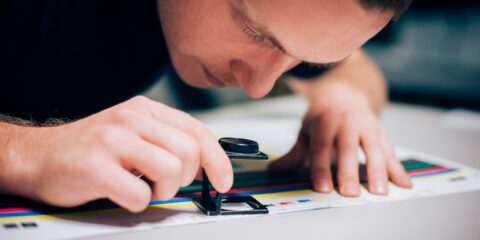
The long-arm jurisdiction of the Unified Patent Court is currently one of the hottest topics in patent law. Following the CJEU’s ruling in BSH Hausgeräte vs Electrolux, it was primarily the dispute between FujiFilm and Kodak over printing plates that made headlines on the subject of long-arm jurisdiction. Other aspects of the dispute temporarily faded into the background.
In January 2025, the Düsseldorf local division concluded for the first time that if the defendant is based in a UPC member state, the court has jurisdiction to hear the case, specifically in this case regarding the UK part of FujiFilm’s patent-in-suit. But it was then the Mannheim local division that ruled the UPC has jurisdiction to decide upon infringement of the UK part of a European patent and granted an injunction for the UK.
The issue is now back on the programme at the Court of Appeal. Today and next Monday, the second panel of the Court of Appeal under presiding judge Rian Kalden will hear a total of eight appeals from the two companies. These concern both the infringement and the revocation claim of two decisions of the Mannheim local division.
Back in 2023
Initially, FujiFilm sued Kodak’s German companies at the Mannheim local division over EP 3 511 174 and EP 3 476 616. These protect methods for manufacturing planographic and lithographic printing plates. FujiFilm also filed suit at the Düsseldorf local division over infringement of EP 3 594 009, concerning chemical components for the printing plates.
In January 2025, the Düsseldorf UPC judges revoked EP 009 and dismissed FujiFilm’s infringement claim. But the judges did not rule on the long-arm issue and FujiFilm did not appeal this decision. The dispute has therefore shifted its focus meanwhile to the two proceedings in Mannheim.
In the Mannheim proceedings, however, the long-arm issue played a very specific role. First, the Mannheim UPC judges separated the UK portion and jurisdiction decision early on in view of the upcoming CJEU ruling in BSH vs Electrolux.
Later, the Mannheim judges found EP 174 valid and infringed. The judges ordered Kodak to cease and desist and pay damages in Germany. Kodak fared better in proceedings for EP 616. Here, the Mannheim judges revoked EP 616 due to lack of inventive step.
After the CJEU ruled on BSH Hausgeräte vs Electrolux, the Mannheim UPC judges extended the April rulings on EP 174 and EP 616 to the UK. These various rulings are now subject to the Court of Appeal’s hearing.
Separate hearings
Over the next two working days, the second panel will now hear the appeals separately for the two patents. Today, Kodak’s appeals against the injunction from Mannheim over EP 174 are on the agenda (case IDs: UPC_CoA_312/2025, UPC_CoA_880/2025, UPC_CoA_333/2025, UPC_CoA_882/2025).
This will be followed on Monday by FujiFilm’s appeals against the revocation of EP 616 (case IDs: UPC_CoA_473/2025, UPC_CoA_474/2025, UPC_CoA_873/2025 and UPC_CoA_881/2025).
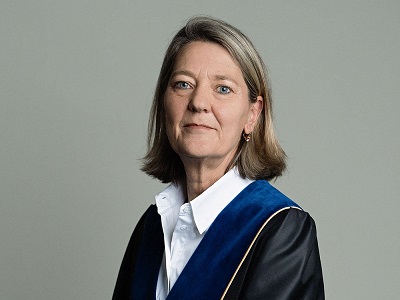
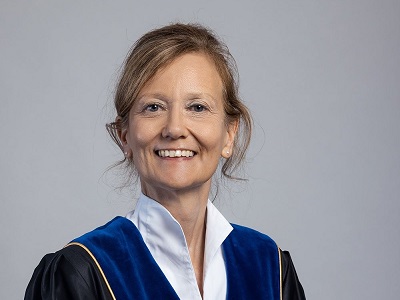
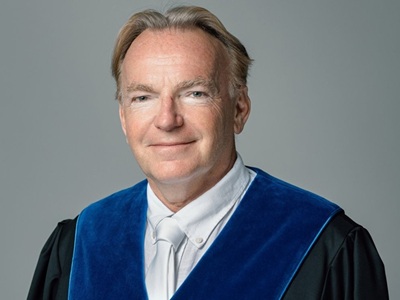
In all appeals, the panel is composed of the same judges. In addition to presiding judge and judge-rapporteur Rian Kalden, the panel also includes Patricia Rombach and Ingeborg Simonsson by default. Two technically qualified judges will assist, Max Tilmann and Lorenzo Parrini.
-

- Rian Kalden
-

- Patricia Rombach
-

- Ingeborg Simonsson

Before the weekend, the five judges will first hear the arguments of Kodak and FujiFilm on the EP 174 injunction. Unsurprisingly, Kodak will argue that its printing plates do not infringe the patent and that it is not valid in any case. Arguments on private and obvious prior use will play a role.
Should Kodak prevail with the judges, this would invalidate a hefty penalty that the Mannheim local division imposed on Kodak in January. The local division had found Kodak did not comply with the conditions of the injunction ruling and imposed a penalty of over €1.7 million against Kodak. This order is in any case the subject of a separate appeal by Kodak, which the court will not hear today or Monday.
No further CJEU referral expected
However, in today’s hearing the court will not discuss the long-arm issue. According to JUVE Patent information the judges have informed the parties that they will not consider this matter until Monday. On the second day of the hearing, there is likely to be a discussion on whether the court should have issued the injunction for the UK despite the UK not participating in the UPC.
Only recently, the first panel of the Court of Appeal referred important questions on long-arm jurisdiction to the CJEU for clarification. But the referral in Dyson vs Dreame focuses on whether one of the defendants is sufficient as an anchor defendant to issue an injunction for products of a manufacturer based outside UPC territory for non-UPC countries such as Spain.
In the dispute between FujiFilm and Kodak, on the other hand, three German companies are defendants and the Mannheim judges extended the injunction to the UK. The CJEU judges have already dealt with this scenario under Article 4(1) of the Brussels Ia Regulation.
A suspension of the hearing due to the CJEU referral is therefore not expected. A second referral to the EU Court is also rather unlikely.
Validity up for discussion
Both today and next Monday, the two technical judges Tilmann and Parrini will probably have their work cut out. Today, Kodak is likely to argue vehemently why EP 174 is not valid and why the injunction against its products was therefore wrongly issued.
-

- Max Tilmann

-
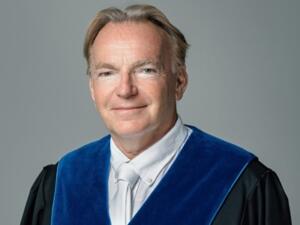
- Lorenzo Parrini
In the meantime, FujiFilm asked the European Patent Office to limit EP 616 in summary proceedings. The EPO has complied with this request.
Next Monday, FujiFilm will do everything in its power to convince the panel why EP 616 was wrongly revoked by the local division and that Kodak’s printing plates now infringe the limited patent. Kodak will then defend itself by arguing that the patent remains invalid and that FujiFilm’s approach of limiting EP 616 is not permissible.
New advisors for FujiFilm
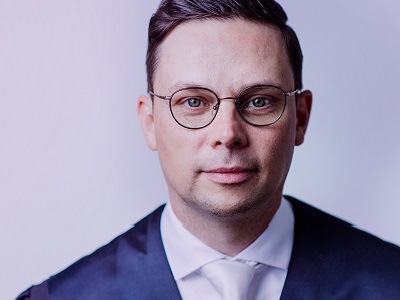
At the start of the dispute, FujiFilm relied on an international team from Hoyng ROKH Monegier. However, the plaintiff later decided to entrust the appeal proceedings to Kather Augenstein. Christof Augenstein leads the team, which also comprises partner Sören Dahm and counsel Robert Knaps, as well as Nicole Schopp, Benedikt Walesch, Arne-Steffen Kamps, Carsten Plaga, and Christoph Heringlake.
FujiFilm also changed counsel on the patent attorney side. Hoffmann Eitle had previously filed the patents-in-suit and it was ter Meer Steinmeister & Partner supporting FujiFilm on the technical aspects in the first-instance cases. In the meantime, Herzog IP has not only taken over the representation of EP 616 in the EPO proceedings, but patent attorneys Martin Herzog and Ansgar Hakvoort are also involved in the UPC appeal proceedings.
-

- Christof Augenstein

-

- Sören Dahm
-

- Nina Bayerl

-

- Wolrad Prinz zu Waldeck und Pyrmont

Kodak continues with its original counsel from Freshfields. While partner Wolrad Prinz zu Waldeck und Pyrmont and senior associate Eva Acker represented Kodak in Düsseldorf, partner Nina Bayerl and associates Elena Hennecke and Kilian Seidel acted for the company in Mannheim. In today’s appeal hearing, both teams will jointly represent the company.
Carlotta Mannes, Anton Porsche and Yordan Terziev from the German practice are also on the Freshfields team. A small London team led by partner Christopher Stothers played a role, with associate Katherine Dudman assisting.
The Vossius & Partner patent attorney team of Natalia Berryman and Ursula Schnackenbeck provides technical support for Kodak in all three proceedings. Vossius & Partner has filed Kodak’s European patent applications for years.