Bayer loses Dutch Xarelto dosage patent in Sandoz appeal
Bayer has suffered a setback in the ongoing battle over its blockbuster anticoagulant Xarelto. The Court of Appeal in The Hague has revoked the Dutch part of the important dosage patent. Overturning a first-instance ruling, the judges found the patent obvious. The decision aligns the Dutch position with earlier rulings in France, Germany, the UK, and South Africa, while the EPO Boards of Appeal and the Swedish court have taken the opposite view.
3 August 2026 by Konstanze Richter

The current dispute between Bayer and Sandoz revolves around EP 1 845 961, which describes a dosage for Bayer’s thrombosis drug Xarelto using the active ingredient rivaroxaban. While the European Patent Office revoked EP 961 in the first instance in 2018 due to lack of inventive step, the EPO Boards of Appeal reinstated the patent in autumn 2021. The patent was valid until January 2026.
In its judgment, the Dutch Court of Appeal set aside the November 2023 decision of the District Court The Hague, which had upheld EP 961 and granted Bayer an infringement injunction against Sandoz. The appeals panel, comprising justices M.Y. Bonneur, J.W. Frieling, and J.W. Meewisse, concluded that the patent lacked inventive step and should not have been granted (case ID: 200.338.443/01).
EP 961 is central to Bayer’s efforts to maintain market exclusivity for Xarelto in Europe following the expiry of the basic substance patent EP 1 261 606 and its SPC in April 2024. Without EP 961, generic drug manufacturers such as Sandoz can enter the Dutch market with their own rivaroxaban products.
On appeal, Sandoz introduced a new prior-art argument based on a patient information form and accompanying booklet issued to participants in Bayer’s Phase II Einstein-DVT dose-finding study. Sandoz obtained the Dutch-language documents through a request under the Open Government Act.
Public availability of study documents
The central legal question was whether the patient information form formed part of the prior art. Bayer acknowledged that the documents had been distributed to ten patients before the 31 January 2005 priority date, including two patients in the Netherlands. Bayer argued, however, that the patients were bound by an implied duty of confidentiality due to their special relationship with the investigators and Bayer as sponsor.
The Court of Appeal rejected this argument. Referring to the EPO Guidelines for Examination, the judges applied the principle that information is publicly available unless confidentiality has been expressly or tacitly agreed. Written statements from Dutch researchers confirmed that no confidentiality obligation had been imposed and that the form was “non-confidential by its nature”. The panel found that the two Dutch patients were free to further disseminate the document, which meant it formed part of the prior art.
The court also dismissed Bayer’s argument that treating consent forms as public disclosure would create an “undesirable consequence” for patent applicants conducting clinical studies. According to the judges, this concern could easily be addressed by expressly agreeing confidentiality with patients.
Obviousness assessment
Turning to the substantive assessment, the court examined whether the patient information disclosed all features of claim 1 of EP 961. The key sentence stated that the medicine BAY 59-7939 “is available in tablet form, is taken once daily and works quickly”. The panel found that a skilled person would identify the internal Bayer code BAY 59-7939 as rivaroxaban through a routine internet search, in particular via the freely accessible Perzborn article available online before the priority date.
The court also concluded that the phrase “works quickly” disclosed the rapid-release feature of the claim, since a medicine can only take effect after being released from the tablet. On efficacy and safety, the judges held that a skilled person would assume that the Einstein researchers, sponsored by Bayer, had a sound scientific basis for initiating a Phase II study into the optimal once-daily dosage. This was significant because, based on the known half-life of rivaroxaban of four to six hours, the skilled person would previously have expected a twice-daily or three-times-daily regimen.
The panel concluded that the skilled person would have arrived at the claimed subject matter without inventive effort, or would at least have had a reasonable expectation of success in initiating a corresponding research programme. Judges found claim 2, which relates to specific thromboembolic disorders, invalid for the same reasons.
Divergent European rulings
The Dutch judgment adds to a fragmented European landscape. The Paris Judicial Court declared the French part of EP 961 invalid at the request of Sandoz. The Court of Appeal later upheld the decision. A court in South Africa had previously revoked the patent. The UK High Court also found the patent invalid in April 2024, a decision upheld by the Court of Appeal in May 2024. In July last year, the German Federal Patent Court revoked the German part of the patent, after a previous qualified opinion given in 2024 had assumed the patent’s validity.
By contrast, first instance courts in the Netherlands and Sweden had previously upheld EP 961. The EPO Boards of Appeal reinstated the patent in full in October 2021 after the Opposition Division had revoked it.
Furthermore, In 2024, Munich Regional Court and Oslo District Court ruled that patient information cannot be regarded as state of the art.
With the recent decision in second instance, the Dutch part of EP 961 has been revoked and Bayer’s infringement counterclaims dismissed. An appeal to the Supreme Court is still possible.
Xarelto is one of Bayer’s most important revenue drivers. Damages proceedings arising from the UK preliminary injunctions are already pending before the London courts, where Sandoz is seeking an account of profits rather than the conventional loss-of-profits calculation.
Brinkhof for Sandoz
Sandoz continued to rely on its long-standing counsel Daan de Lange from Amsterdam-based IP boutique Brinkhof. He worked on the case together with Barbara Mooij and Isabelle Kleinveld. The firm has represented Sandoz throughout the Dutch proceedings, including at first instance.
Bayer instructed an Amsterdam-based team from A&O Shearman led by partner Frits Gerritzen. Associate Sara Swinkels, German partner Stefan Neuhaus, and counsel Caroline Bley assisted. The law firm’s patent teams are also acting for Bayer in the proceedings in Germany, the UK, and France. The IP practice has a coordinating role in the pan-European litigation.
-

- Daan de Lange
-

- Frits Gerritzen
-

- Arwed Burrichter
-
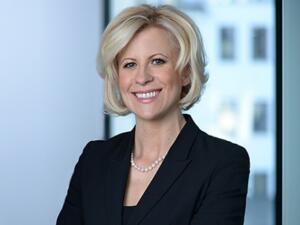
- Natalie Kirchhofer
On the patent attorney side, Bayer relied on Düsseldorf IP firm Cohausz & Florack. The two renowned partners Arwed Burrichter and Natalie Kirchhofer coordinate the technical aspects of the pan-European litigation. The advisors worked closely with Bayer’s in-house team, led by Stephan Beyreuther and Elisabeth Haselhorst of the IP litigation team.
In the previous proceedings in the Netherlands, the pharma originator initially worked with a Simmons & Simmons team led by Bas Berghuis van Woortman, who moved to Taylor Wessing in summer last year.
