Bérénice Thom takes over second panel at local division Düsseldorf
For some time there has been speculation that Düsseldorf would receive a second panel. Now it is official. Following the recent announcement that Ingo Rinken would be joining the division in March, the UPC has now established a second panel with Bérénice Thom at the helm.
6 February 2026 by Laura King

According to documents published on the UPC website, the Düsseldorf local division will get a second panel from 1 March, on the same day Düsseldorf patent judge Ingo Rinken will join the UPC on full time basis. Currently, Ronny Thomas, Jule Schumacher and Bérénice Thom are the only judges at the second largest local division. The presidium decided on the second panel on 20 January in Paris, appointing Thom as its presiding judge.
In December JUVE Patent reported that Rinken was to join the Düsseldorf local division from Düsseldorf Higher Regional Court, where he worked alongside former presiding judge Ulrike Voß in the 15th senate. This came among a slew of other judge appointments to the panels in Munich, The Hague and the Nordic-Baltic division.
The first panel comprises presiding judge Ronny Thomas and Jule Schumacher. Schumacher joined the local division Düsseldorf in February 2025 from the 2nd Civil Senate at the Higher Regional Court Düsseldorf.
-
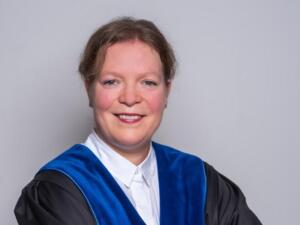
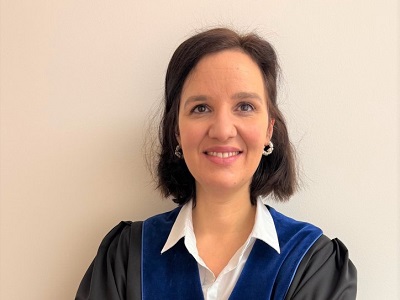
- Bérénice Thom
-
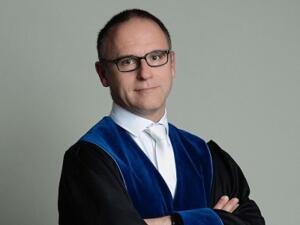
- Ronny Thomas
-
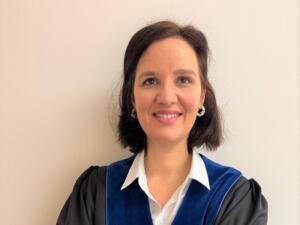
- Jule Schumacher
Prior to the establishment of a second panel, the three judges handled proceedings with Thomas as presiding judge plus either Thom or Schumacher and a foreign judge and, if necessary, a technically qualified judge.
Two two-panel divisions
Behind Munich, Düsseldorf is the second most popular division in terms of case numbers. Last summer, the patent community was already speculating as to whether officials would create a second panel at the venue similar to Munich. The UPC had also added a third panel at the Court of Appeal to deal with the rising caseload.
Munich and Düsseldorf the only local divisions with two panels. Due to the high level of cases, there is already speculation over whether Munich might even receive a third panel.
-
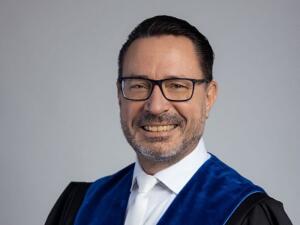
- Matthias Zigann
-
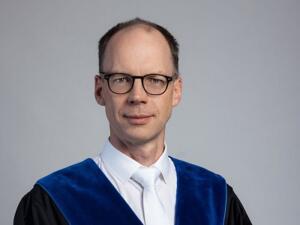
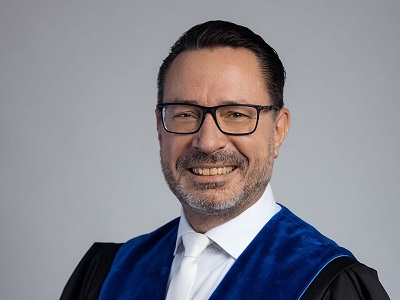
- Daniel Voß
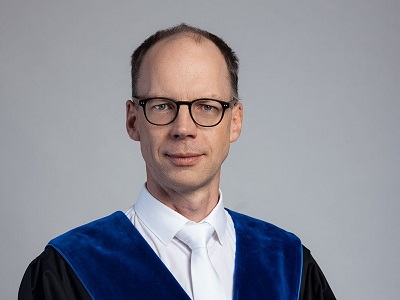
In its decision from 20 January, the UPC also appointed the presiding judges of the two panels of the local division Munich. Presiding judge of the first panel remains Matthias Zigann and presiding judge of the second panel is Daniel Voss. The latter appointment was already public knowledge.
Recruitment drive
As the UPC becomes increasingly popular and its caseload grows, the presidium has been ramping up capacities for some time. At the start of 2025, the UPC announced its ranks would grow significantly. The UPC’s budget for 2025 earmarked funds for 6.9 full-time equivalent judges (FTEs) for the Court of Appeal alone. The court of first instance was to increase from 34.6 FTEs to 47.3 FTEs.
While there were 124 legally and technically qualified judges in mid-2025, by the end of the year there were already 129. In the second half of the year, the Administrative Committee responsible for staffing the court announced the creation of a third panel at the Court of Appeal, as well as four new legally qualified judges and one technically qualified judge.
Significant growth potential
The UPC’s 2026 budget plan allocates 41 full-time equivalent (FTE) positions for the Court of First Instance — 1.8 more than in 2025. The Court of Appeal target remains at 12 FTEs. However, even after adding a third panel with three new judges, the Court of Appeal has not reached this target. Currently, ten judges work at 82% capacity, leaving room for 3.8 new FTE positions.
The Court of First Instance has not yet filled its approved 39.1 FTE posts for 2025. The current 38 judges work at 78% capacity, leaving 8.8 FTE positions unfilled from last year’s target, plus the additional 1.8 FTE positions for 2026. This indicates significant growth potential. (Co-author: Mathieu Klos)