Huawei takes the win in interim licence dispute with TP-Link
The UK High Court has awarded an interim licence to an SEP holder for the first time. Judge Richard Meade granted Huawei significantly more money than implementer TP-Link had proposed. The Wifi 6 battle is an unusual FRAND case.
9 February 2026 by Mathieu Klos

Unlike typical FRAND rate-setting cases at the UK High Court concerning mobile communications or streaming portfolios, both TP-Link and SEP holder Huawei had agreed to accept the rate set by the court. In a similar dispute, for example, Amazon asked the UK High Court to set a FRAND rate, whereas InterDigital had not committed to accepting it. These two companies have been battling intensely since last autumn.

Richard Meade
The dispute between Huawei and TP-Link over licensing of the Wifi 6 portfolio is notably less contentious. In this case, UK High Court judge Richard Meade has now granted an interim licence (case ID: HP-2025-000045).
Accordingly, TP-Link must pay an interim licence fee to Huawei. The amount is calculated using the “mid-point method”. This corresponds to the average of the amount requested by Huawei (based on its standard licence rates) and the lump sum of $12 million proposed by TP-Link as the lowest limit. Huawei had already submitted several comparative licences in the proceedings.
Surprising sales figures
However, the calculation basis will increase further. Shortly before the judgment was announced, it emerged that TP-Link achieves very high sales figures with so-called “mesh products”, likely to include wifi repeaters. The specific figures are now available.
Judge Meade had ordered that the specific interim licence rate be determined in a form of order hearing. To this end, both TP-Link’s lump sum and Huawei’s offer must now be adjusted upwards to account for the mesh product sales.
TP-Link’s approach rejected
It is standard practice at the UK High Court to use the mid-point method for calculating the interim licence. TP-Link attempted to persuade judge Meade to calculate the rate using a significantly more complex analysis of existing licences (“unpacking analysis”), but did not succeed.
“TP-Link’s Unpacking Analysis is, in my view, not an appropriate way to get to an interim award. It is not sufficiently reliable because it has no expert input, it is highly complex and its assessment would require a mini-trial, as was amply demonstrated by the complexity of the arguments at the hearing before me,” Judge Meade writes in his judgment.
Judge Meade used the period from 2008 to April 2027 to calculate the rate. TP-Link started selling its products in 2008. In April next year, the court intends to set the actual FRAND rate in the main proceedings. Meade rejected TP-Link’s argument that it should not have to pay for the period prior to 2018 due to the statute of limitations.
The UK High Court will therefore continue to include past sales when calculating licences. Interestingly, the Munich Regional Court has recently adopted the opposite approach.
Advance payment plus interest
The High Court set TP-Link’s lowest offer of $12 million as a non-refundable payment. The actual interim licence rate now depends on the outcome of the form of order hearing.
In addition, the advance payment must include interest at the rate of US Prime + 1% on past sales.
TP-Link was also unsuccessful in its demand that the interim payment be made to an escrow agent. TP-Link must now pay it directly to Huawei.
Parallel battles in Munich
Huawei had sued TP-Link in the summer of 2025 at the UPC local division Munich (case ID: UPC_CFI 804/2025) and at the Regional Court Munich (case IDs: 7 O 11043/25 and 21 O 11045/25). Huawei is also suing the implementer in Chinese courts.
The determination of the interim licence is now also likely to impact the two proceedings at the Regional Court Munich. The latter’s 7th Civil Chamber recently modified its guidelines for SEP proceedings.
The chamber has a large number of SEP proceedings and assumes that, in future, implementers that have initiated a FRAND-rate setting procedure in the UK will have to pay the non-refundable payment determined by the UK court to the SEP holder in order to be considered willing to grant a licence. In addition, they must deposit the additional amount of the interim licence as a security payment with the regional court.
Pressure on TP-Link grows
The proceedings in Munich are still at an early stage. The main trial in the rate-setting proceedings in the UK is still some way off. Following the interim licence judgment, it is now questionable whether these cases will reach the judgment stage, as the pressure on TP-Link grows. TP-Link can still appeal against the latest ruling.
Numerous SEP battles such as Panasonic vs Xiaomi and Oppo or Ericsson vs Lenovo were quickly settled once an interim licence was granted. In more recent cases such as Samsung vs ZTE or Nokia vs Asus and Acer, parties have not yet reached a settlement. However, these proceedings do not revolve around wifi patents.
Initial reactions
Experts initially saw the judgment as a good result for SEP owners. According to JUVE Patent information, Huawei is the SEP holder that has submitted an undertaking in the UK rate-setting proceedings. The prerequisite was probably providing a number of comparative licences.
Huawei may also have speculated on a favourable outcome in order to take the wind out of the sails of other implementers considering rate-setting proceedings in the UK.
Three leading barrister sets
According to JUVE Patent research, all three leading barrister sets were present in the proceedings. Lead barristers for Huawei and TP-Link were Marc Chacksfield and Andrew Lykiardopoulos, respectively. Both are from 8 New Square.
Second barrister on behalf of TP-Link was Thomas Lunt from Three New Square. Lunt was featured in JUVE Patent’s Ones to Watch 2025. Huawei also relied on Edward Cronan from 11 South Square.
-
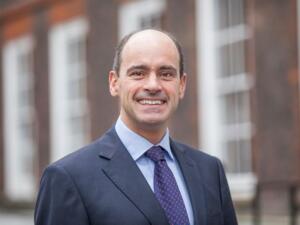
- Andrew Lykiardopoulos
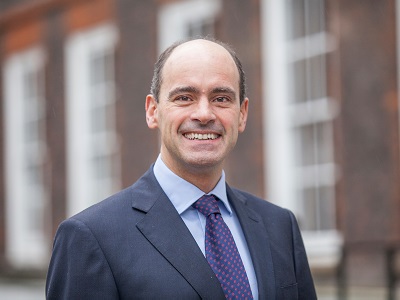
-

- Edward Cronan

-

- Thomas Lunt

-

- Mark Chacksfield
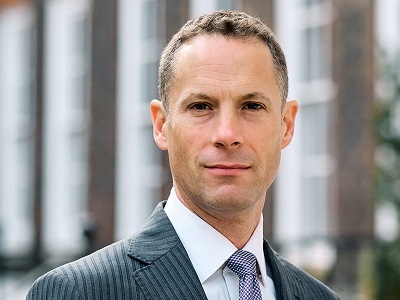
Chacksfield and Cronan were instructed by the London team from Bird & Bird. London-based partner Richard Vary is in the lead, supported by William Warne. Bird & Bird also runs the UPC and German cases on behalf of Huawei. Düsseldorf-based partner Christian Harmsen is in the lead. Patent attorneys from Eisenführ Speiser are also involved. Dylan Li, head of Huawei’s European IP department, and Thomas Dreiser, chief IP litigation counsel (EMEA), are supporting the dispute in-house.
-

- Richard Vary

-

- Annsley Ward

Lykiardopoulos and Lunt were instructed by a WilmerHale team around London-based partner Annsley Ward. In the UPC case, TP-Link relies on Klaus Haft from Hoyng ROKH Monegier.
